

 Old Site
Indonesian governance framework creaks amid concerns of government meddling
by Chris Leahy, ACGA
Indonesia is enduring a rough year in governance. After the MSCI market shock in January, when the index provider unexpectedly threatened to downgrade Indonesia to frontier market status, due to persistent problems: tiny minimum public floats and beneficial ownership transparency, the market fell precipitously. Swift moves from Indonesia’s Financial Services Authority (OJK) and the Indonesia Stock Exchange (IDX) to address the problems via hastily introduced rule changes, have failed thus far to convince MSCI that the problems have been solved. MSCI has postponed its final decision on any reclassification of Indonesia’s market until November.
In February, OJK and IDX announced plans to demutualize the stock exchange to address perceived conflicts of interest, strengthen governance and improve its competitiveness. The IDX, like most other stock exchanges in Asia, will become a for-profit corporation. The move will separate membership trading rights from ownership and is expected to lead to investment from external entities, and eventually, likely a listing on its own exchange.
The OJK is still working on the detailed rules for the demutualization plans, which it says will be completed by the end of Q3 2026. However, concerns are already being raised by analysts that the government of President Prabowo Subianto will use the IDX demutualization as an opportunity to centralize control over a key economic asset. On August 10, IDX confirmed that it had received a written expression of interest from state-owned investment entity, BPI Danatara, to invest in the demutualized IDX and expected Bank Indonesia, the central bank and the Ministry of Finance to invest alongside Danantara.
While the OJK and IDX were quick to reassure investors that the IDX will remain independently run from state interference, recent events have increased concerns among international investors that President Prabowo’s government remains focused on exerting increasing control over key parts of Indonesia’s vast economy.
On July 27, Bank Indonesia Governor Perry Warjiyo on July 27 unexpectedly announced his resignation, just two years before completion of his term. Long regarded by investors as an independent and capable technocrat, Warjiyo claimed he was resigning for personal reasons. Analysts pointed to the February appointment as a deputy governor of Prabowo’s nephew, Thomas Djiwandono, as an indication that the independence of Bank Indonesia was uncertain and that Warjiyo had resigned as a result. Strong enough was the international approbation that Prabowo blinked, nominating Destry Damayanti, a veteran economist and widely regarded as credible, to replace Warjiyo.
Of even more concern among international investors and analysts is the increasing participation in Indonesia’s economic development of Danantara, with concerns that its increasingly assertive role as a consolidated super-holding entity and sovereign wealth fund represents a fundamental transition toward state capitalism. Since its founding in 2025, Danantara has assumed strategic investment control over more than US$600 billion in SOEs, including banking behemoths such as Bank Mandiri and Bank Rakyat Indonesia, state oil company Pertamina and power monopoly Perusahaan Listrik Negara. While the Prabowo government claims that Danantara’s goal is to reform the SOEs and improve efficiencies and returns, critics note that centralizing control over so many critical state assets concentrates economic control and decision making within a very small number of politically connected hands. For example, the Chief Investment Officer of Danantara, Pandu Sjahrir, is the nephew of Luhut Binsar Pandjaitan, the Chair of President Prabowo's National Economic Council and one of Prabowo’s closest allies. Danantara’s supervisory board is chaired by Erick Thohir, the SOE Minister. And Danantara CEO, Rosan Roeslani, was the Chairman of Prabowo’s 2024 Presidential campaign.
Roeslani will be familiar to many international investors. He was the CEO of Berau Coal, an Indonesian mining company when it became entangled in the Nathaniel Rothschild/Bumi plc debacle back in 2012. As that deal unwound amid acrimony and litigation, an independent investigation undertaken in 2013 by law firm Macfarlanes LLP revealed that some US$173 million was funneled out of Berau Coal during Roeslani’s tenure as CEO for expenditures that had "no clear business purpose."
As Indonesia fights to regain international credibility for its capital markets, it can ill-afford any further political or economic scandals. The OJK and IDX only moved to amend the IDX rules after the powerful external stimulus provided by MSCI, and the ensuing market rout. The IDX rules had languished untouched for years prior to that. Real market credibility requires more than reactive compliance. If Indonesia is to restore foreign investor confidence in its economy and markets, it will need more transparency and institutional autonomy, not increased state interference and political cronyism.
About the Author(s)
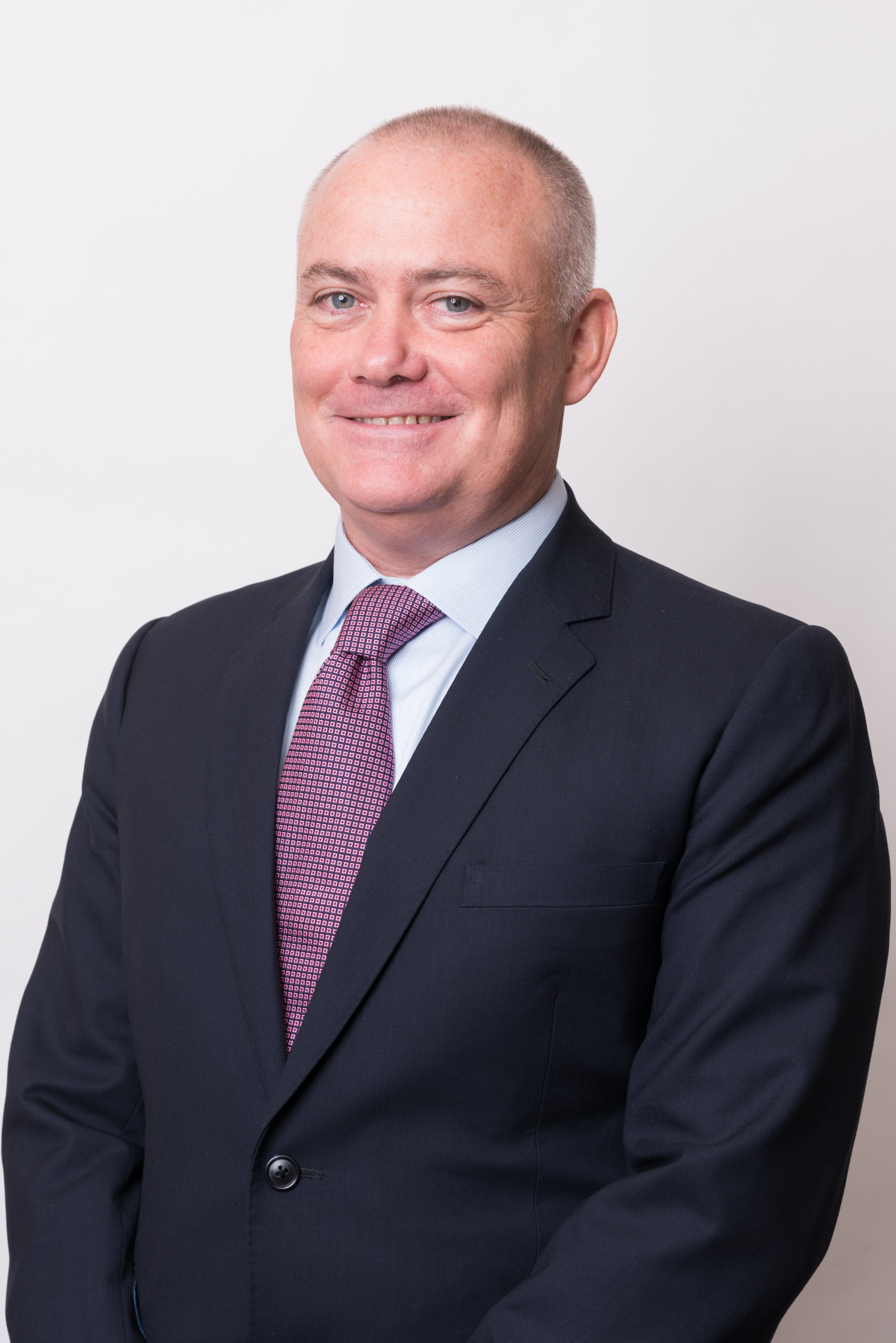 Christopher Leahy
ACGA Specialist Advisor, Southeast Asia
Christopher Leahy is Specialist Advisor, Southeast Asia, with ACGA. Chris is also Executive Director of Barbican Advisory, a global risk research and advisory firm. Barbican advises clients across financial services, investment, industry and law on due diligence, strategic intelligence and dispute advisory. Chris founded Velos Research, an independent research and advisory firm that partners with project owners, companies and investors to convert emission-reduction projects into commercial realities. Chris is also an independent non-executive director of Destileria Barako Corporation, an independent distillery and drinks group in the Philippines.
Chris co-founded and managed Blackpeak, an investigative research and advisory firm. Prior to that, he was head of Kroll in Asia Pacific and was a journalist for Euromoney (Asia Editor) and Asiamoney (Contributing Editor).
Chris began his career as a stockbroker and was later an investment banker, working in the UK and Asia with leading financial institutions such as Warburg Securities (now UBS), BNP Paribas Peregrine and Crosby. For the past 30 years he has been based in Asia.
Chris began writing for ACGA in 2003, specialising on Southeast Asia. He has written the Indonesia and Philippines chapters in ACGA’s CG Watch report since 2007 and has contributed to other markets as well, including Malaysia, Thailand and Singapore. He has spoken at numerous ACGA member events over the past decade and has represented the organisation as a speaker at many conferences in the region.
Download File Disclaimer
In addition to the ACGA website disclaimer access to the "Members' Area" of the ACGA website is subject to the general disclaimer and content attribution statements below.
General Disclaimer
By logging into our Members' Area you acknowledge that all materials displayed on the site or made available for download are for the exclusive use of ACGA members. You may not share the content with parties outside of your organisation.
Content Attribution
The copyright ownership of all material on our website belongs to ACGA. Should you wish to use any materials in the course of your corporate research, including directly quoting or paraphrasing sections, reprinting, reproducing or the like, we request that you give proper acknowledgement to ACGA and share a copy with us. Please email mikky@acga-asia.org.
