“The last 15 minutes is often where the real conversation begins,” remarked one investor who joined ACGA’s China delegation from May 25-29, 2026.
The delegation, the first since 2017, was marked by many such moments. As meetings drew to a close, a senior official at the State-owned Assets Supervision and Administration Commission (SASAC) moved off-script with advice on how to read China’s governance model; domestic asset managers spoke frankly about the challenges of stewardship; and delegates raised the need for stronger CFO accountability on ESG disclosure.
Those moments reflect something larger. Nine years ago, stewardship, ESG disclosure and market value management barely registered on the regulatory agenda, let alone in the priorities of listed companies and domestic institutional investors.
But now, China is in the middle of a meaningful CG upgrade. A revised CG Code is being implemented. Stewardship rules for mutual funds are now in force, with the first voting records made public. Mandatory ESG disclosure is rolling out across 470 major index constituents and dual-listed issuers. The market value management initiative is now more than 18 months old.
The trip cannot settle every question. But it offers a direct read on where regulators are pushing, where the challenges lie, and where the enthusiasm is palpable. A few observations stand out.
ESG disclosure: breadth before assurance
ESG disclosure has risen to the top of the agenda for stock exchanges, listed companies, and the China Association for Public Companies (CAPCO). All are candid about the practical challenges at hand: the subjective judgement involved in double materiality assessments, the complexity of data collection, and the difficulty of quantifying financial impacts. Across meetings, delegates pointed out CFO ownership of ESG disclosures as the missing link.
However, third-party assurance is still in its early days. The Shenzhen Stock Exchange focuses on expanding coverage before raising the bar on assurance. While all issuers subject to the mandatory reporting requirement have complied, the disclosure rate among all A-share issuers sits at 49.2%, according to CAPCO.
Stewardship: navigating the hard part
The 2025 stewardship rules for mutual funds issued by the Asset Management Association of China (AMAC) are a game changer. Now comes the harder part.
ZD Proxy shared with delegates its analysis of the voting disclosures by 165 mutual funds. The big picture is one of concentrated activity: the top 10 most active managers accounted for nearly 70% of total votes cast, and wide disparity exists even within the largest 30 managers by AUM. Dissent, meanwhile, remains rare: only 1,138 votes cast against management or as abstentions, just 1% of the total.
AMAC acknowledged key hurdles for stewardship. Capacity-building costs weigh heavily on smaller asset managers; many remain more inclined to exit than to engage. The deeper gap, as delegates highlighted, is the still-limited role of asset owners.
Market value management: ROE enters the frame
Market value management has been largely anchored in cash dividends and share buybacks. The Shanghai and Shenzhen exchanges pointed to growth in both as headline achievements, while SASAC highlighted rising SOE market capitalisation and an uptick in M&A activity.
Delegates flagged the lack of focus on capital allocation and ROE as a gap in the framework. SASAC called it a “sharp and critical” point and confirmed that ROE will be incorporated as a KPI in the performance assessments of central SOEs this year.
Separately, the Shanghai Stock Exchange in June launched the 2.0 version of its “Corporate Value and Return Enhancement” initiative, building on the original campaign introduced in 2024.(1) The updated framework encourages companies to select at least two financial or non-financial metrics such as ROE, gross margin, sales volume, and R&D milestones, and develop targeted improvement plans.
CG rules: board secretary steps up
In April 2026, the China Securities Regulatory Commission (CSRC) kicked off a one-year initiative to implement the CG Code that was revised last October. Of the eight areas it covers, strengthening the board secretary’s role is particularly notable(2). The Regulatory Rules for Board Secretaries of Listed Companies, which took effect in May, elevate the position as a key driver of board functioning, with raised expectations around information disclosure, investor communication and stakeholder relationship management.
Both Shanghai and Shenzhen stock exchanges amended their listing rules in April 2026. In meetings with delegates, they highlighted two key changes:
• Tighter qualification standards. Board secretaries are prohibited from holding other executive positions concurrently. Companies have until the end of 2027 to come fully into compliance.
• Clearer accountability on information disclosure. Board secretaries coordinate the release of annual and other periodic reports, but carry primary responsibility for interim announcements.
During the trip, delegates also met with board secretaries from Huadian International Power, Ping An Insurance, and other listed companies. These conversations provided a window into how ESG issues are handled at board level — a level of access that investor relations personnel typically cannot provide.
Independent directors: a new nomination pathway
The CSRC’s initiative also supported the China Securities Investor Services Center (ISC) in nominating independent directors (INEDs) and encouraged mutual funds to participate in the process. (3)
As a CSRC-backed retail investor protection body, the ISC holds 100 shares in every listed company on the Shanghai, Shenzhen and Beijing exchanges. Since China’s threshold for submitting a shareholder proposal is 1%, it collaborates with other shareholders to jointly nominate an INED candidate. Once the board approves, the ISC publicly solicits proxy voting rights. The mechanism has been deployed at more than 20 listed companies to date. (4)
Further action points
Despite real progress, gaps remain. Looking ahead, ACGA will prioritize engagement in the following areas:
• Market value management. Disclosure quality, and the robustness of the capital management frameworks behind it, will need close monitoring.
• Stewardship. Asset owners remain conspicuously quiet in China’s stewardship story. ACGA will explore convening an asset owner–asset manager roundtable in China.
• Board access. Investors rarely speak directly with INEDs in China. CAPCO and stock exchanges are receptive to facilitating more dialogue between investors and INEDs.
• ESG disclosure. As the volume of reports rises, more dialogue between investors and CFOs is needed on what credible ESG reporting actually requires.
Footnotes
3. Established in 2014, the ISC is a government-backed body supervised by the CSRC and dedicated to protecting
the rights of retail shareholders in China.
About the Author(s)
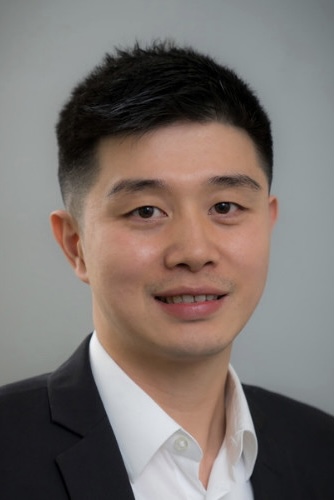 Lake Wang
Research Head, Greater China, ACGA
Lake Wang joined ACGA in October 2023. He supports ACGA’s research on corporate governance and ESG development in 12 Asia-Pacific markets, with a focus on Greater China. Before joining ACGA, Lake worked for an equity hedge fund for over five years. Additionally, he conducted research at global professional services firms and in academi


 Old Site