

 Old Site
Taiwan reflections: Power Up, paradoxes and path ahead
by Lake Wang, ACGA
Over the past two years I have travelled to Taiwan five times, with corporate governance as the one constant thread in discussions held with regulators, investors and companies. Ahead of the first trip, puzzled by some of Taiwan’s more distinctive CG features, I turned to a CG veteran. He said: “Taiwan is different.”
Historically, Taiwan’s CG framework has drawn on German, Japanese and Anglo-American models, forming what former lawyer Lawrence S. Liu called “a synthesis of a hundred schools of thought” (zonghe baijia 綜合百家).(1) In practice, companies apply this hybrid framework within a cultural milieu shaped by family capitalism.
Years of reform, dating at least to the 2013 Corporate Governance Roadmap, have markedly improved Taiwan’s standards and practices. Today, the island is ahead of the curve on ESG disclosure and assurance, and it stands out for investor protection, notably through the work of the Securities and Futures Investors Protection Center (SFIPC). As other markets have opened the door to dual class share listings, or plan to, the Financial Supervisory Commission (FSC), Taiwan’s top financial regulator, has chosen not to follow suit.
Yet the CG landscape is not without its paradoxes. Taiwan is among a smaller group of markets, including France, the Netherlands, Belgium and Spain, that allow a corporate entity to serve as a director. Even as stewardship gains momentum, insurance companies are barred from voting on director elections.(2) Despite a low 1% ownership threshold for submitting a shareholder proposal, shareholder activism has yet to match the levels seen in Japan and Korea. Viewed from this perspective, Taiwan does seem different.
With ACGA’s annual conference in Taipei (4-5 November) fast approaching, it is an apt moment to ask where Taiwan’s corporate governance stands today.
The conference, together with the accompanying delegation visit and related events, will offer ample opportunities to explore this question and others. This piece focuses on the Power Up initiative and on longstanding issues affecting board dynamics, drawing on our recent engagements with regulators and stakeholders in Taiwan.
Power Up takes off
Unveiled in June 2024, the Power Up Plan is Taiwan’s answer to Value Up-style programmes. In our Value Up, Asia report, we noted that participation would be the key to taking the then-fledgling plan to the next level. (3) By then, the Taiwan Stock Exchange (TWSE) had already taken several steps: adding a provision to its Corporate Governance Best Practice Principles (the CG Code) and a new metric to its CG evaluation to encourage adoption, releasing a disclosure template modelled largely on Japan’s framework, and launching the IR Engagement Platform to enhance investor communication. As at end-April 2025, only nine out of 1039 TWSE-listed companies – a mere 0.87% – had disclosed a plan.
Participation has evidently taken off. As at end-December 2025, 487 TWSE-listed companies – roughly 46% of the total – had published a plan, led by financial services (91%) and paper products (71%) sectors. (4)
Meanwhile, the TWSE has upgraded the programme to Power Up 2.0, with fresh incentives. Disclosure guidance has been updated with templates tailored to three scenarios; the ESG evaluation, rebranded from the CG evaluation, will give an extra point for standout disclosures; and the IR Engagement Platform is due to expand its services.
The harder test
Taiwanese regulators have an effective toolkit for promoting higher-quality Power Up disclosures and have demonstrated that they are able to use these tools in practice. As a case in point, the TWSE has developed and used its stewardship evaluation to drive improvements in disclosures by local asset owners and managers.
The harder test lies beneath the disclosures. First, changes need to take place in boardrooms, with long-term shareholder value embedded in how directors think and make decisions. At a roundtable discussion jointly hosted by ACGA and the TWSE in August 2026, one corporate representative said that constructing the company’s Power Up plan had helped align the board and management around long-term value. An ESG professional added that the initiative “structured everything together.” To what extent smaller issuers embrace that spirit at board level remains an open question.
Second, investor-company dialogue needs to extend beyond the investor relations level. In a recent interview, Sherman Lin, Chairman of the TWSE, described the central aim of Power Up as closing the information gap: “We would like companies like TSMC and Wiwynn to report to investors on their mid- and long-term strategies.” (5) He also spotlighted “hidden champions”, overlooked yet profitable companies in the biotech, construction, food and leisure sectors.
Power Up is, in large part, about boosting the visibility and investment appeal of Taiwanese public companies beyond marquee companies like TSMC, which alone accounts for more than 40% of the benchmark TAIEX. To close that information gap further, global investors typically seek direct engagement with boards, particularly independent directors (INEDs). In Taiwan this level of dialogue remains sporadic rather than systematic.
In May 2026, the TWSE revised Article 28 of its CG Code to encourage audit committee chairs to engage with investors. Whilst this is a welcome step, securing corporate buy-in will require greater outreach and familiarisation, beginning with two basic questions: how do these meetings benefit both sides? What do investors actually want from discussions with INEDs?
Familiar board dynamics
Power Up has given Taiwan’s corporate sector fresh impetus, but some older board dynamics still play out.
On paper, board structure requirements in Taiwan are aligned with international norms. Female directors should represent one third of the board on a comply-or-explain basis: from 2025, TWSE-listed companies that fall short must explain why and set out remedial measures. (6) From 2027, INEDs must hold at least one third of board seats, with tenure capped at nine years. Audit and remuneration committees are mandatory, whilst the nomination committee remains voluntary. Additionally, the audit committee should be fully independent.
However, one distinctive feature of Taiwanese boards persists: the legal entity director — a director seat held by an organisation rather than a natural person. This structure exists in some other markets, but Taiwan is unique in permitting the organisation to replace its representative at will, without a shareholder vote.
The practice dates back to 1946, when Taiwan’s Company Act was amended to allow a company to serve as a director. Since then, it has been widely used by government agencies and families to retain corporate control. As of April 2018, some 27,000 companies had legal entity directors; of these, 31 had the government as a director. (7)
Repealing this rule would be difficult. The Company Act falls under the purview of the Ministry of Economic Affairs, and any amendment ultimately rests with the Legislative Yuan. (8) This leaves the FSC with limited scope to change the arrangement among listed companies.
The proliferation of legal entity directors has contributed to the slow development of nomination committees (NCs). As noted in CG Watch 2023, if corporate shareholders are entitled to nominate representatives and change them at will, what is the point of an NC? As of May 2026, only 207 TWSE-listed companies, or 19%, had established an NC or a combined committee performing the nomination function, according to the FSC. (9)
A more pressing question is whether an NC, where one exists, can operate effectively and independently in practice. Controlling shareholders in Taiwan often establish an investment holding company to serve as the legal entity director and then appoint a natural person as the entity’s representative. Local CG experts we spoke to acknowledged that excluding controlling shareholders’ influence over the nomination process is unrealistic. This leaves a harder problem: how can an NC, required, if formed, to comprise primarily INEDs, discharge its duties in any meaningful way?
At the regulatory level, the TWSE is developing practical guidance on how NCs should operate. It will seek feedback from ACGA members during the pre-conference delegation to Taipei.
Coda
On a more recent trip, I was taken to visit Anping Old Fort in Tainan, in southern Taiwan, en route to Kaohsiung, where events were being held to promote the island as an asset management centre. In hindsight, the Dutch-built fort is symbolic of Taiwan’s complex past. Viewed historically, the paradoxes in the island’s corporate governance appear less an anomaly than a result of the crosscurrents that have shaped it. Taiwan has made significant progress in modernising corporate governance; there is still further ground to cover.
[1] Lawrence S. Liu, From Zhuangzi to Enron: A+ Corporate Governance (Taipei: CommonWealth Magazine, 2002).
[2] See ACGA, Stewardship in Asia – Frameworks, codes and practices, https://www.acga-asia.org/thematic-research.php
[3] Please see: https://www.acga-asia.org/thematic-research-detail.php?id=522
[4] Source: https://www.twse.com.tw/staticFiles/news/news/tsecnews/8a8216d69a3d6cf9019b8dcf835106aa.pdf
[5] Nicholas Gordon, "Why the Head of Taiwan's Stock Exchange Wants You to Look Past TSMC—and Embrace the 'Technology Island,'" Fortune, August 31, 2026, republished via Yahoo Finance, https://finance.yahoo.com/markets/stocks/articles/why-head-taiwan-stock-exchange-070000905.html
[6] Female directors held about 21% of board seats at Taiwan-listed companies by end-2025, up from roughly 19% a year earlier. Source: https://www.fsc.gov.tw/ch/home.jsp?id=448&parentpath=0,7,446&mcustomize=sextarget_view.jsp&dataserno=202604280001&dtable=SexTarget
[7] Source: https://www.cna.com.tw/news/afe/201804190345.aspx. The Ministry of Economic Affairs does not provide regular data on the number of Taiwanese companies with legal entity directors. The figures cited here were disclosed by Lee Mei, an official from the Ministry of Economic Affairs, during a public hearing at the Legislative Yuan in 2018 on the revision of the Company Act.
[8] During the major revision of the Company Act in 2018, Article 27 that governs legal entity directors became a flashpoint of heated, divided debate. Given how deeply entrenched the system had become, the Ministry of Economic Affairs opted to keep this Article intact.
[9] Data provided by the Securities and Futures Bureau under the FSC at a recent meeting.
About the Author(s)
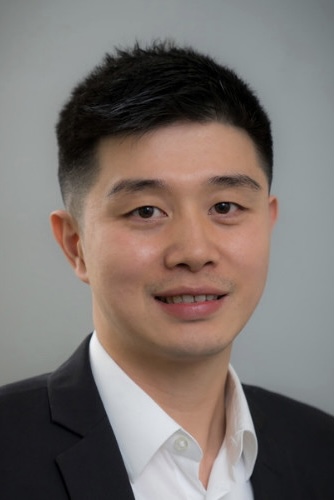 Lake Wang
Research Head, Greater China, ACGA
Lake Wang joined ACGA in October 2023. He supports ACGA’s research on corporate governance and ESG development in 12 Asia-Pacific markets, with a focus on Greater China. Before joining ACGA, Lake worked for an equity hedge fund for over five years. Additionally, he conducted research at global professional services firms and in academ
Download File Disclaimer
In addition to the ACGA website disclaimer access to the "Members' Area" of the ACGA website is subject to the general disclaimer and content attribution statements below.
General Disclaimer
By logging into our Members' Area you acknowledge that all materials displayed on the site or made available for download are for the exclusive use of ACGA members. You may not share the content with parties outside of your organisation.
Content Attribution
The copyright ownership of all material on our website belongs to ACGA. Should you wish to use any materials in the course of your corporate research, including directly quoting or paraphrasing sections, reprinting, reproducing or the like, we request that you give proper acknowledgement to ACGA and share a copy with us. Please email mikky@acga-asia.org.
